


Six years after the pandemic, companies are pushing for “Return to Office”–something many employees are meeting with dread and frustration, bending the rules on, or simply refusing. It also makes it difficult to court new talent. Amazon, for example, implemented a strict RTO policy in 2025. While claiming to have increased efficiency and improved culture, it has caused backlash in many ways, specifically in recruiting. The pandemic revealed that much of our work could easily be achieved remotely. Thus, many employees left the commutes, business attire, and cubicles behind. Now on the other side, it’s become difficult to entice people back. Yet, many remote workers are being mandated back into the office with little more than “because management wants it” as a reason. If the goal is to get more people in the office, without bringing down morale and driving away talent, the current effort doesn’t seem to be working.
What might a different, more human-centered approach look like?
The Physical Environment Matters
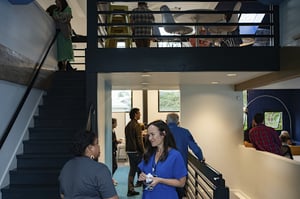
If you’ve ever been to the Intentional Futures office, you’ll get why I, as the Office & Building Coordinator, love it. It was originally designed and built in the 1980s by Mark Weisman for his architectural landscaping design firm, and remained lovingly tended by him until he sold the building to iF in 2022. I feel lucky to have taken such a beautiful building under my care. A stunning katsura tree in the front, well-established bushes that bloom every year, a relaxing back patio with a fountain and sunlight dappling the water through the vining leaves on the trellis. When we renovated the building after purchase to make sure it suited iF’s business needs and its style, we engaged the design intensive architecture firm Best Practice. They conducted surveys and held insightful discussions with iFsters to determine how to shape the space to best support them. The result was a smart, open design that captured iF’s personality perfectly, in concert with the original architecture of the building.

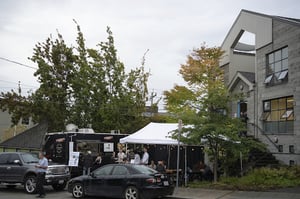
Because I can’t screw in a lightbulb or rake leaves remotely (yet) I’m in the office four days a week. I’m technically the only iF employee with an “RTO mandate,” but in a building like this, I can’t complain. Other iFsters are free to come in whenever they’d like, but it’s never required outside of certain company events that are scheduled with ample notice. So for them, a beautiful space is nice, but is it enough to encourage leaving the comfort of their home? What else do they get out of it?
Human-Centered Design in all that we do
Intentional Futures centers human experience in both our client work and internal projects. See our Humanistic AI workshop, where we led a thought experiment on removing the human element from nonprofit work to showcase how vital that humanity is in this AI-forward world. Or our Operational Effectiveness practice, where we implement KBIs (Key Behavior Indicators) to help businesses reach the outcomes they desire by teaching them how culture is forged in the workplace, and how that culture reliably achieves those outcomes. This perspective carries into our office philosophy. It’s my goal to make the office a more inviting place for employees, and keeping their humanity at the forefront of that experience is how we achieve that.
One of my favorite ways we demonstrate the value of in-person connection is through our all-staff meetings. These meetings are lively, thought-provoking, and fun. Simple sketches can be done on whiteboards to illustrate complex ideas. Conversations where we can read each other’s body language and respond to the energy of another person can quickly reach profound insights. It is immediately obvious how much more efficient and high-quality this work is. In understanding this, iFsters easily determine what conversations would be better addressed in-person. Brainstorming sessions, client meetings, strategy development retreats, are scheduled voluntarily in the office because people have seen the value of working in-person.
A Home Away from Home
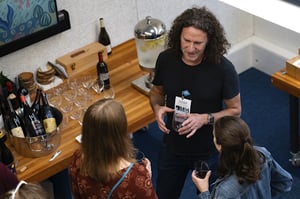
We’ve seen a massive decrease in “third spaces” in our modernizing world. Some may bristle at the thought of the office becoming the new third space, but something about the iF office feels different. Our CEO held a concert here, with his childhood best friend as one of the performers. Our Head of People and Culture hosted a table-read for their new play at one of our conference tables, which was later produced in a theatre just a few blocks from the office. We’ve stayed late into the evening after all-staff meetings to sing karaoke and play Mario Kart. It is genuinely fun to be in community with iFsters. Focusing on creating real advantages to employees for doing in-person work, and making a welcoming space in which to do that work, ensures the return to offices is a mutually beneficial decision. And creating real moments of joy doesn’t hurt, either.
If you’re interested in learning more, check out our services or write us at info@intentionalfutures.com